Victoria Beckham makeup rules: No Makeup for Harper
Victoria Beckham makeup rules is standing firm when it comes to her daughter Harper’s beauty routine. Despite growing up surrounded by fashion, skincare and cosmetics, the teenager cannot wear makeup to school. When Harper asked her famous mother to intervene, Victoria refused to challenge the school’s rules, offering a revealing glimpse into the family’s approach to beauty, discipline and growing up.
Victoria Beckham makeup rules for most teenagers, makeup is a way to experiment with identity, express personality and feel more confident. For Harper Beckham, however, the subject has become a particularly interesting family story. Her mother is one of the most recognisable figures in fashion and beauty, yet even the Beckham name cannot guarantee an exception to a school dress code.
Victoria Beckham’s makeup rules are attracting attention not simply because of the family’s celebrity status, but because they raise a question many parents face: how do you encourage a teenager’s interests while making sure that boundaries remain in place?
Victoria Beckham makeup rules Refuses to Call Harper’s School
Victoria Beckham makeup rules are attracting attention not simply because of the family’s celebrity status, but because they raise a question many parents face: how do you encourage a teenager’s interests while making sure that boundaries remain in place?.
Harper reportedly questioned the restriction, asking why the school did not want her to look her best. She then turned to her mother with a straightforward request: could Victoria call the school and ask for an exception?
Victoria declined.
For a family accustomed to international attention, exclusive fashion events and high-profile professional opportunities, the exchange offered a surprisingly relatable moment. Harper wanted her mother to use her influence, while Victoria chose not to intervene in a rule imposed by the educational institution.
The decision is significant because it separates the world of celebrity from the everyday responsibilities of being a student. However famous her parents may be, Harper is still expected to follow the same rules that apply in her school environment.
Victoria Beckham makeup rules response also suggests that supporting a child does not necessarily mean agreeing with every request. A parent can recognise a teenager’s feelings and interests without automatically removing every obstacle that stands in the way.
Growing Up in a World of Fashion and Beauty
Harper has grown up in a household where fashion is more than a profession. Her father, David Beckham, is a global football icon and entrepreneur, while her mother has built a career spanning music, fashion design and beauty.
Victoria first became internationally famous as a member of the Spice Girls before establishing herself as a respected fashion designer. Her eponymous label developed into a wider luxury business, and Victoria Beckham Beauty extended her aesthetic into makeup and skincare.
For Harper, this environment has provided an early introduction to the creative and commercial sides of the beauty industry. Makeup is not merely something she sees on a bathroom shelf; it is also part of her mother’s professional world, involving product development, branding, presentation and an understanding of what consumers want.
Victoria has previously spoken about the time she spends with her daughter experimenting with cosmetics at home. In a 2019 appearance on ITV’s This Morning, she explained that they enjoyed playing with makeup together, while making a distinction between experimenting at home and wearing it outside.
That distinction remains central to the story today. Enjoying beauty products and being allowed to wear them in every setting are two different things. For Victoria, Harper’s enthusiasm does not automatically override the expectations attached to her age or school environment.
From Playful Makeup Experiments to Personal Style
Beauty can be a creative activity, particularly for young people discovering their preferences. Choosing a lip colour, experimenting with a subtle eye look or learning how skincare works can become a way to explore aesthetics and personal expression.
Victoria has previously described Harper as naturally talented at applying makeup. In interviews, she has spoken about her daughter’s ability to create polished, natural-looking results and their shared interest in beauty products.
For a teenager growing up around fashion professionals, these experiences can offer an informal introduction to the industry. They can also create opportunities for conversation between parent and child, allowing practical questions about products, ingredients and personal care to be discussed in a familiar environment.
Nevertheless, there is an important difference between developing an interest and feeling obliged to meet a particular beauty standard. Makeup can be fun, but it should not become a requirement for feeling attractive or being accepted by others.
Harper’s story therefore touches on a broader issue affecting young people in an image-conscious culture. Social media, celebrity beauty campaigns and online tutorials can make sophisticated routines appear normal even when viewers are still developing their own sense of identity.
A balanced approach allows teenagers to explore these interests without suggesting that cosmetics are necessary to look their best. Natural appearance, experimentation and individual preferences can coexist without one being presented as superior to another.
Victoria Beckham Makeup Rules: Why Harper Cannot Wear Makeup at School
School dress codes are often intended to establish a shared set of expectations for students. Depending on the institution, rules may address clothing, jewellery, hairstyles and cosmetics. The details vary, and the reasons behind individual policies are not always the same.
In Harper’s case, the reported restriction concerns wearing makeup during school. The available account does not establish every detail of the school's policy, so it would be inaccurate to assume that all cosmetics are prohibited in every circumstance or that the rule applies outside school.
What is clear from Victoria’s account is that she did not agree to seek special treatment for her daughter.
For some parents, the instinct might be to question a rule they consider unnecessarily restrictive. Others might see compliance as an opportunity to teach children that different environments have different expectations. Neither response necessarily reflects a universal parenting formula; much depends on the policy itself and the circumstances involved.
Victoria’s decision illustrates one particular approach: allowing the school’s rule to stand rather than using parental influence to obtain an exception.
It also offers a reminder that boundaries can be part of a supportive relationship. Teenagers need opportunities to make choices, but they also need guidance in understanding that not every preference can be accommodated immediately.
Five Lessons Behind Victoria Beckham’s Makeup Rules
Although the story centres on a celebrity family, it highlights five themes that extend well beyond the Beckham household.
1. Beauty Should Be an Interest, Not an Obligation
Makeup can be a form of creativity and self-expression. It should not become a condition for feeling confident or being considered attractive. Encouraging a young person to explore beauty while respecting their natural appearance can help keep the subject in perspective.
2. Family Support Does Not Mean Saying Yes to Everything
Parents can encourage their children’s ambitions while maintaining reasonable boundaries. Victoria’s refusal to call the school demonstrates that supporting Harper does not necessarily mean challenging every decision that disappoints her.
3. Different Environments Have Different Expectations
A beauty look that works for a celebration, a creative activity at home or a fashion event may not be appropriate in a classroom governed by specific rules. Understanding context is part of developing independence.
4. Confidence Can Develop Without Special Treatment
Being part of a famous family can bring opportunities, but it can also create expectations that every difficulty can be solved through influence. Learning to navigate ordinary rules may help young people develop patience, resilience and a clearer understanding of responsibility.
5. Interests Can Become Ambitions Over Time
A teenager’s curiosity about beauty might remain a personal hobby or eventually develop into a professional interest. The important distinction is that young people should have time to learn, grow and understand the practical realities behind the industries that inspire them.
Harper Beckham and the Future of Beauty
Harper’s interest in cosmetics has also attracted attention because of reports that she is exploring the possibility of developing her own beauty brand. Recent coverage has described her ambitions in the industry, with Victoria discussing her daughter’s ideas and presentations.
Reports have associated the proposed venture with the name Harlo by Harper. However, a reported business plan should not automatically be treated as confirmation of a launch date, a final product range or a completed commercial venture.
The idea is nevertheless intriguing. Harper has access to a first-hand view of how a beauty business operates, from product discussions to branding and consumer preferences. Through her mother’s experience, she can observe that the industry involves far more than attractive packaging and celebrity recognition.
Developing a successful brand requires a clear identity, an understanding of the intended audience, attention to product quality and a credible reason for consumers to choose one product over another. These lessons take time to learn, even for someone growing up close to the fashion and beauty worlds.
Victoria’s reported guidance reflects the difference between encouraging ambition and rushing into a business venture. A young person can have a serious interest in entrepreneurship while still needing education, experience and time to develop an idea.
For now, the school makeup rule and the reported beauty ambitions remain separate subjects. Being unable to wear cosmetics in class does not mean Harper cannot learn about the industry, experiment in appropriate settings or explore her interests outside school.
Victoria Beckham: A Fashion Icon Who Is Also a Mother
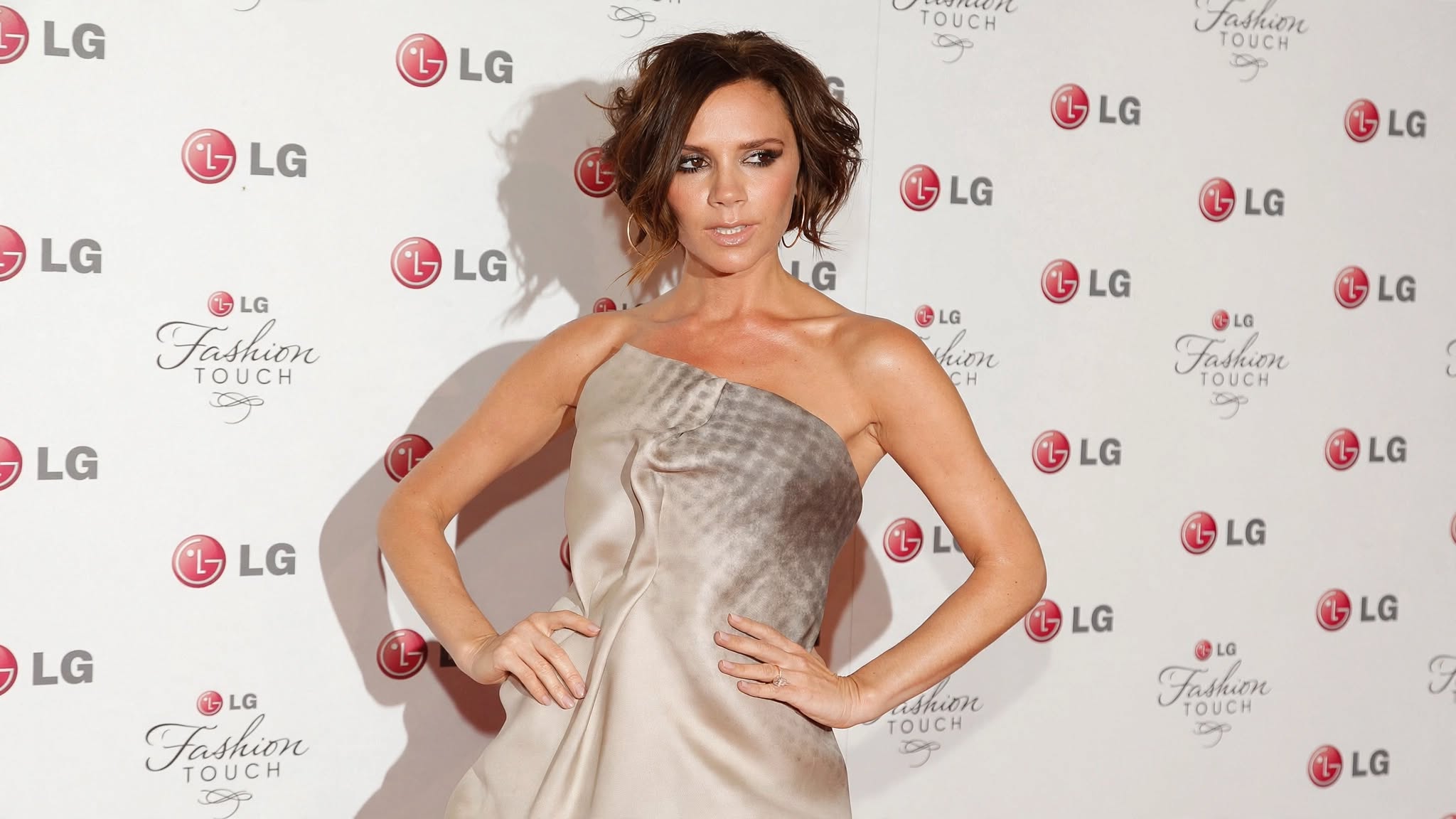
Victoria Beckham’s public image has long been associated with precision, polished styling and a distinctive approach to fashion. Her career has required her to balance creativity with commercial decisions, while building a brand recognised internationally.
Yet stories about her children reveal a more ordinary dimension of family life. Parents who work in glamorous industries still face familiar questions about school rules, independence, personal preferences and how much freedom to give their teenagers.
There is also an important distinction between Victoria’s professional relationship with makeup and Harper’s developing relationship with it. For Victoria, cosmetics form part of a business and an established personal style. For her daughter, they are also an area of curiosity, experimentation and potential future ambition.
Those experiences can overlap without being identical. A teenager does not need to follow a parent's career path, and an early interest does not determine what the future will hold.
The most interesting part of this story may therefore be less about makeup itself and more about the way family expectations evolve as children grow older. Harper is developing her own preferences, while Victoria is deciding where encouragement should end and parental boundaries should begin.
The Final Word: No Special Treatment, Even for Harper Beckham
Victoria Beckham’s decision not to call Harper’s school has turned a small family disagreement into a widely discussed celebrity story. It brings together fashion, beauty, parenting and the challenges of growing up under public scrutiny.
The episode does not prove that every school makeup restriction is right for every student, nor does it establish a universal rule for parents. Instead, it shows how one family is navigating a familiar disagreement: a teenager wants more freedom, while her mother is unwilling to request an exception to an existing policy.
For Harper, the situation is a reminder that even a famous surname cannot guarantee that every rule will change. For Victoria, it is an opportunity to show that encouragement and boundaries can exist together.
And for the wider beauty conversation, the story raises a useful question: should makeup be treated as an essential part of looking one's best, or simply as one of many ways to express personal style?
Perhaps the most valuable lesson is that confidence should never depend entirely on cosmetics. Makeup can be creative, enjoyable and empowering, but it is not a prerequisite for self-worth. As Harper continues to grow and explore her interests, the balance between personal expression and responsibility will remain part of her journey.
Ultimately, the Victoria Beckham makeup rules story is about more than cosmetics: it highlights the relationship between teenage independence, parental guidance and school expectations.
Swipe Reading — Fashion, Lifestyle, People & Global News.